When you’re watching an excavation services crew at work, moving soil, coordinating heavy equipment, or navigating the edges of a freshly dug trench, it’s easy to focus on the size of the machinery rather than the complexity of the risks involved. But at Lazer Companies LLC, we know nothing matters more than safety. We’ve seen how quickly an excavation site can shift from routine to dangerous if the right procedures aren’t in place. And while many people assume excavation work is just “digging dirt,” the reality is that these spaces can be some of the most hazardous environments in construction.
Unstable soil, unmarked utilities, blind spots, machinery hazards, and trench collapses all contribute to a worksite that demands training, planning, and constant awareness. That’s why every reputable provider of excavation services puts safety at the center of every job. When safety is approached proactively, productivity rises, risks drop, and projects stay on track. When safety is overlooked, the consequences can be devastating, physically, financially, and structurally.
This guide breaks down why excavation safety matters, which practices are essential for any job site, and how to choose contractors who take your project and your protection seriously.
Why Is Excavation Safety Important?
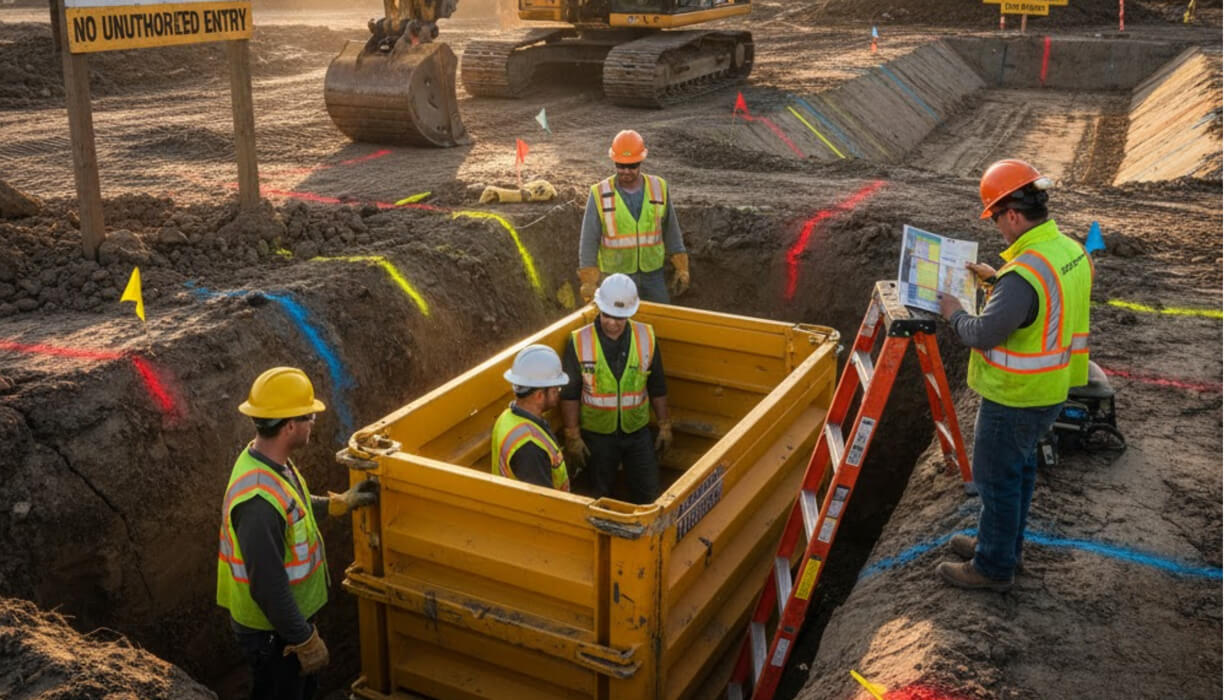
Excavation safety is essential because excavation job sites contain numerous hazards capable of causing severe injuries, costly damage, or significant project delays. One of the most dangerous risks is trench collapse. Soil can weigh over 3,000 pounds per cubic yard, and even a minor shift can trap or injure a worker within seconds. Excavation zones also hide underground utilities such as gas, water, telecom, and electrical lines. If these aren’t properly located and marked, they can create life-threatening situations or lead to expensive, large-scale repairs.
In addition, heavy machinery, unstable footing, falling materials, and restricted visibility increase the risk of accidents. OSHA classifies excavation and trenching as some of the most hazardous operations in construction, emphasizing the need for proper sloping, shielding, soil testing, and equipment safety.
By enforcing strict safety protocols, contractors protect workers, prevent lawsuits, avoid costly delays, and maintain structural integrity. For companies providing excavation services, prioritizing safety is not optional, it’s the foundation of responsible, efficient, and compliant project execution.
Why Is Safety Important at a Site?
Safety is essential on any construction site because hazards can escalate quickly, especially in excavation work where the environment can change from hour to hour. An unsafe job site increases the risk of injuries, equipment damage, unexpected repairs, liability claims, and costly schedule delays. Construction sites already involve moving machinery, unstable soil conditions, blind spots, and unpredictable weather. Without structured safety systems, the likelihood of accidents rises dramatically.
A safe site also enhances productivity. When crews feel protected and understand their roles, work moves more smoothly. Communication improves, errors decrease, and deadlines become more achievable. Clients benefit too, because a safe environment reduces downtime and prevents unplanned expenses.
At Lazer Companies LLC, our reputation for reliable, professional excavation services is built on the belief that safety is not just a protocol, it’s the backbone of every successful project.
What Is the Best Safety Practice When Working In or Around an Excavation?
The single most important safety practice in excavation work is continuous, proactive site evaluation from the moment crews arrive until the project is complete. Excavation conditions change quickly, and the safest companies never assume that yesterday’s assessment still holds true today.
Key evaluation steps include:
- Daily soil inspections to check for moisture, cracks, shifting, or instability
- Reinforcing trenches using sloping, benching, shoring, or shielding depending on soil type
- Locating and marking underground utilities before digging begins
- Monitoring moisture levels that may affect trench strength
- Ensuring proper access/exit points within trenches deeper than four feet
- Using trained spotters when heavy machinery is in motion
- Adjusting safety protocols after rainfall, freezing temperatures, or high winds
Even a well-built trench can turn unstable after overnight weather changes. That’s why experienced providers of excavation services conduct ongoing evaluations throughout the day, not just at the start of the project.
This is one of the many reasons why getting multiple quotes is so valuable. Not all contractors follow the same safety standards and comparing quotes helps you identify who prioritizes thorough planning and who may be cutting corners.
What are the Safety Measures for Excavation Work?
Excavation safety measures revolve around preparation, documentation, trained personnel, and constant monitoring. Whether the project involves trenching, grading, or full-scale site development, the following steps should always be in place:
1. Utility Location and Marking
Before any digging begins, underground utilities must be identified, marked, and confirmed with the appropriate local agencies. This prevents gas leaks, electrical hazards, water line breaks, and major service disruptions.
2. Soil Testing
Different soil types behave differently under pressure. Clay, sand, silt, or mixed granular soils each require specific protective systems. Soil stability must be checked regularly as moisture and temperature change.
3. Protective Trench Systems
Depending on soil conditions and trench depth, contractors implement:
- Sloping (cutting the trench walls back)
- Benching (creating stepped levels)
- Shoring (installing support systems)
- Shielding (using trench boxes)
These systems prevent cave-ins, the leading cause of excavation fatalities.
4. Safe Access and Exit Points
Ladders or ramps must be installed every 25 feet for trenches deeper than four feet, ensuring workers never become trapped in an emergency.
5. Equipment Inspection
Backhoes, loaders, excavators, and other machinery must be inspected daily. Only trained operators should control heavy equipment, reducing the risk of mechanical failure or operator error.
6. Weather Monitoring
Rain, freezing temperatures, high winds, and rapid shifts in moisture can destabilize soil or alter the integrity of a trench. Constant monitoring helps contractors adjust their protective systems in real time.
7. On-Site Communication Protocols
Clear communication, hand signals, radio systems, and defined roles—prevents confusion when crews work near heavy machinery or deep trenches.
8. Perimeter and Environmental Safety
Barriers, warning signage, fencing, and adequate lighting protect crews and prevent accidental falls or unauthorized access.
Professional providers of excavation services view these safety measures as non-negotiable. They are essential for protecting workers, clients, and the long-term success of the project.
Final Thoughts
Excavation is one of the most crucial phases of any construction project. But without strict safety practices, it quickly becomes one of the most dangerous. From trench collapses and unmarked utilities to unstable soil and shifting site conditions, excavation requires careful planning, trained crews, and ongoing vigilance.
When you choose reputable providers of excavation services, you’re choosing more than just a contractor. You’re choosing risk reduction, long-term protection, and peace of mind. A safe site keeps timelines intact, prevents costly setbacks, and safeguards everyone involved.
At Lazer Companies LLC, we’re proud to deliver excavation work rooted in safety, precision, and professionalism. Utah property owners and businesses rely on us because they know responsible excavation begins with responsible safety.
If you want your project handled with professionalism and safety-first precision, feel free to contact Lazer Companies LLC for dependable excavation services you can trust.
Follow our social media pages below: